

The perfect sofa is one that balances style, comfort, and practicality for your specific living space — since it serves as both a functional gathering place and a significant investment that will impact your home for years. Selecting the right sofa requires evaluating multiple factors including size and layout, fabric durability, style preferences, and budget constraints, all of which interact to determine whether a piece will truly work in your home. Common concerns like doorway dimensions, seating capacity, maintenance requirements, and how the sofa coordinates with existing décor can feel overwhelming without a clear framework. This guide provides the essential considerations needed to choose a sofa that combines beauty with functionality while meeting your household's unique needs and lifestyle demands.
Why Choosing the Right Sofa Matters: The Design Principles

3 Seater Nordic Bubble Compressed Sofa Blue Gray — from $3026.00
A sofa represents roughly 30-40% of a living room's visual weight, which means it dramatically influences how a space feels. From a design psychology perspective, your sofa choice affects traffic flow, colour harmony, and whether your room feels welcoming or cramped. Beyond aesthetics, the right sofa must satisfy practical demands: durability, comfort for your family's actual lifestyle (do you have children? pets? do you nap daily?), and longevity. A well-chosen sofa can last 10-15 years, making it one of your home's most important investments. Expert designers always start with the sofa when planning a living room scheme — choosing it first, then building the rest of the palette around it. This is because sofas are difficult to change, so getting this decision right matters enormously.
1. Measure Your Space and Doorways First
Before falling in love with a sofa online or in a showroom, measure ruthlessly. Note your living room dimensions, the wall where the sofa will sit, and crucially, the width of every doorway and hallway the sofa must travel through to reach that spot. Many people discover too late that their dream sectional won't fit up the stairs or through the front door. Use painter's tape to mark out the sofa's footprint on your floor — this sounds tedious, but it's the single most important step. Consider not just the sofa's length, but how it will sit in relation to your TV, windows, and other furniture. Allow at least 18 inches of walkway space on either side of the sofa for comfortable circulation. If you're choosing a modular or sectional sofa, check whether it arrives in separate pieces that can navigate tight spaces — many of our compressed sofas are specifically designed to fit through challenging doorways whilst delivering the comfort of a full-size sofa.
2. Choose Your Fabric Based on Your Lifestyle

Beige Teak Rope Outdoor Sofa Set 4-Piece — from $2352.00
Fabric choice is where theory meets daily reality. If you have young children or pets, luxurious velvet or linen may leave you anxious every time someone sits down. Microfibre and performance fabrics are engineered to resist stains and pilling whilst feeling soft — they're the savvy choice for busy households. Leather (genuine or high-quality faux) ages beautifully and cleans easily, though it can feel cold in winter and sticky in summer. Natural fabrics like linen and cotton breathe wonderfully and age with character, but they require more maintenance and show wear patterns over time. Consider your climate too: in humid regions, natural fibres can absorb moisture, whilst synthetic fabrics resist this. The truth is, there's no "perfect" fabric — only the perfect fabric for your life. Be honest about your household's reality. A designer friend once told me, "The best fabric is the one you won't panic about using." That's wisdom worth remembering when browsing our collection of sofas in various fabrics.
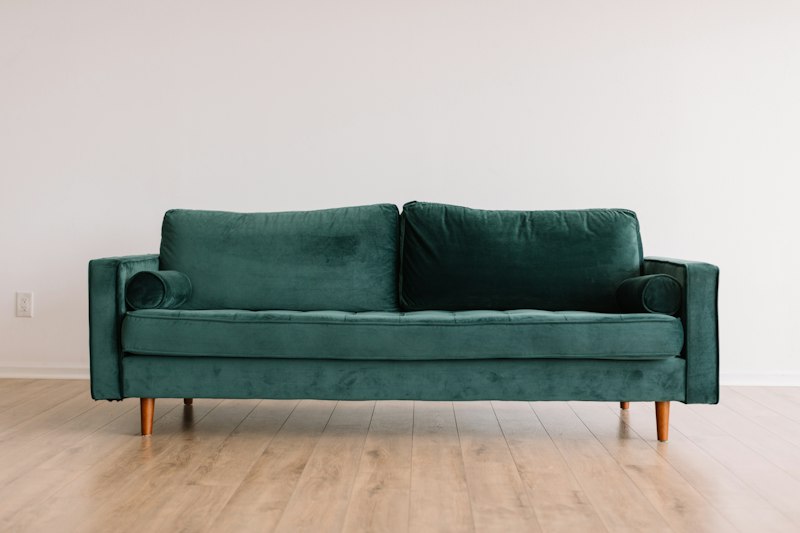
3. Determine the Right Depth and Firmness for Comfort
Sofa comfort is wildly subjective, yet it's quantifiable. Depth (the distance from the front edge to the back) ranges from shallow 28-30 inches (ideal for smaller rooms and those who like to sit upright) to luxuriously deep 40+ inches (perfect for lounging and napping). A good rule: if you're 5'6" or taller, test a sofa by sitting naturally — your feet should touch the floor with about 2-3 inches of cushion support under your thighs. The firmness question divides people: some love the supportive embrace of a firmer sofa (better for backs, easier to stand from), whilst others crave the cloud-like sink of a softer cushion (more luxurious, but may sag over time). Mid-range firmness — often called "medium" — tends to satisfy most households. High-density foam wrapped in down provides the best of both worlds: initial softness with long-term support. Visit a showroom if possible and actually sit on different options for at least five minutes each. Notice how your body feels, whether you'd want to nap there, and whether you feel trapped or supported.
4. Consider Configuration: Sectional, Loveseat, or Standard Sofa
Your room's shape and your household's habits dictate what configuration works best. A standard three-seat sofa (typically 84-90 inches) suits most living rooms and remains the most versatile choice. A sectional (L-shaped or U-shaped) maximizes seating and creates a natural focal point in open-plan spaces, though it demands more square footage. A loveseat or apartment-sized sofa (60-72 inches) works brilliantly in smaller rooms or as a secondary seating piece. Modular sofas offer flexibility: you can reconfigure them as your needs change, move them more easily, and expand them later. Ask yourself: How many people typically sit here? Do you stretch out for movie nights? Do you need conversation seating? Our modern modular outdoor sofas showcase how thoughtful configuration design maximizes both function and style.
5. Match the Sofa's Style to Your Broader Design Scheme
Your sofa should feel like it belongs in your home, not dropped in from a showroom. This doesn't mean it must match everything exactly; rather, it should harmonize with your room's overall aesthetic. A mid-century modern sofa with tapered wooden legs feels jarring in a maximalist eclectic space, just as a heavily rolled, traditional Chesterfield looks out of place in a contemporary minimal setting. Consider the era, materials, and vibe of other major pieces in your room. If your space leans Scandinavian (clean lines, light woods, neutral palette), choose a sofa with simple geometry and natural fabrics. If you love maximalism and pattern, a sofa in a bold colour or subtle texture becomes a statement piece. Pay attention to the sofa's legs too — modern spaces prefer visible, tapered legs, whilst traditional spaces embrace fully skirted bases. The colour of your sofa is crucial; neutrals (grey, beige, cream, charcoal) pair with almost anything, whilst deeper jewel tones or warm terracottas make stronger style statements and limit future flexibility.
6. Set a Realistic Budget and Balance Cost with Quality
Sofas range from $400 to $4,000+ for quality pieces. Budget considerations are real, but think long-term: a $500 sofa lasting five years costs $100 yearly, whilst a $2,000 sofa lasting fifteen years costs $133 yearly. The difference is often negligible, yet the quality leap is dramatic. Mid-range sofas ($1,000-$2,000) offer the best value: they're constructed well enough to last a decade, use decent foam and fabrics, and come from reputable retailers with warranties. Ultra-premium sofas justify their cost through exceptional craftsmanship, heirloom-quality materials, and often lifetime warranties. Budget options can work, but understand the trade-off: they may sag within five years or develop permanent body imprints in cushions. Invest in a sofa as if you're buying for ten years of daily use — because you are. Many retailers offer financing options, making higher-quality sofas accessible without a lump sum payment.
7. Test Delivery Services and Return Policies Before Purchasing
Even the perfect sofa becomes a nightmare if delivery logistics fail. Check whether the retailer delivers to your area, what assembly is required upon arrival, and whether they remove packaging from your home. Some retailers charge $200-400 for white-glove delivery (they place it exactly where you want), whilst others offer basic curb delivery. Understand what "arrives in sections" means: does the back detach? Do legs unscrew? Can one person reassemble it, or does it require two? Equally important is the return or exchange policy. Quality retailers offer 30-100 day trial periods, recognizing that comfort is personal and must be tested in your own space. Confirm whether returns are free or cost-prohibitive. Read recent customer reviews specifically mentioning delivery and setup — these tell you far more about the brand's actual service than their website promises.
⚡ Quick Wins
- Measure everything: Room dimensions, doorway widths, hallway clearance — this single step prevents 80% of sofa problems
- Match your lifestyle: Choose performance fabrics for high-traffic homes; reserve delicate textiles for sophisticated spaces with careful users
- Test in-person when possible: Sit for five minutes in different sofas to understand your true comfort preference
- Consider the long-term cost: A quality $1,500 sofa often costs less per year than a budget-friendly option that fails in five years
- Check return policies: Insist on at least 30 days in your own home before committing — comfort is personal and context-dependent
✶ The Orniture Edit
Our top sofa picks — curated by Orniture
📚 Sources & Further Reading
- Dezeen — Architecture and design publication — Scandinavian design coverage
- Design Museum London — Research and exhibitions on Nordic and Scandinavian design heritage
- Architectural Digest — Interior design guides on Scandinavian styling
- WGSN — Global trend forecasting on Nordic interior design
Content reviewed by the Orniture Editorial Team. About our editorial standards →
Frequently Asked Questions
How do I know what sofa size is right for my living room?
Measure your wall where the sofa will sit, leaving at least 6-12 inches from each corner for visual balance. The sofa should take up about two-thirds of the wall's length, not dominate the entire space. Use painter's tape to outline the footprint on your floor to visualize scale before purchasing. Consider your room's overall dimensions: smaller rooms (under 200 square feet) work better with compact sofas or loveseats, whilst larger spaces can accommodate sectionals without feeling cramped.
What fabric is best for a sofa with pets and children?
Performance fabrics like microfibre, solution-dyed polyester, or specially treated leather are ideal for active households. These fabrics resist stains, don't show pilling easily, and clean with simple soap and water. Avoid delicate natural fibres like linen or silk if your household includes energetic pets or young children. Consider a colour that hides dirt — mid-tones like grey, taupe, or warm brown are more forgiving than light cream or black.
Is it better to buy a sofa online or in a physical store?
Ideally, test sofas in person to evaluate comfort, but purchase from retailers offering excellent return policies and delivery services. Many high-quality brands operate primarily online with showrooms in major cities — you can visit to test comfort, then order online for potentially better pricing. Always confirm return windows (aim for 30+ days) and understand what "free returns" truly means: some require you to arrange and pay for pickup, negating the benefit.
How long should a quality sofa last?
A well-made sofa with proper care lasts 10-15 years, sometimes longer. Quality construction (8-way hand-tied springs, high-density foam, hardwood frames), good fabric choices, and regular maintenance (fluffing cushions, professional cleaning annually) extend lifespan significantly. Budget options might fail in 5-7 years due to foam breakdown, whilst premium pieces crafted from heirloom materials can last 20+ years. The investment in quality pays dividends over time.
What's the difference between a sectional and a standard sofa?
A sectional offers an L- or U-shaped configuration, maximizing seating for larger families or open-plan living. It typically seats 4-6 people and creates a natural gathering hub. A standard sofa (straight configuration) seats 3-4, requires less floor space, and offers more flexibility for rearrangement. Sectionals suit spacious modern homes and families prioritizing lounge capacity; standard sofas work better in smaller rooms or traditional layouts where flexibility matters.
Choosing the perfect sofa is about balancing aesthetics, comfort, practicality, and budget in a way that feels authentic to your home and life. Take your time, measure carefully, and trust your instincts — your sofa will spend more time with you than most furniture pieces, so it deserves thoughtful consideration. Ready to explore beautiful, well-crafted sofas built for real living? Browse our compressed sofa collection today and discover options designed for modern comfort, thoughtful style, and long-lasting quality. Your perfect sofa awaits.


